
Start with the job the shed must do
The best shed is the one that fits what you own, how often you need to access it and where it can be delivered. Write down the largest item first: a riding mower, ATV, workbench or shelving unit sets a more useful minimum than a general “small, medium or large” label. Then decide whether the space is for basic storage, a workshop, a backyard office or animal shelter. Each use changes the layout and features worth paying for.
Portable Buildings of Alberta offers storage sheds, utility sheds, studio sheds and horse shelters. Compare models for your actual use instead of choosing only by appearance.
Size the usable space, doors and access
Measure each large item, then add space to move around it. A mower or snowblower needs room for the door swing and a clear path; shelving needs wall space; a workshop needs circulation around the bench. Sketch the floor plan with doors, windows and storage before choosing the exterior footprint. Think ahead to new equipment you may buy in the next few years.
Ask about the door opening, not just the overall shed width. Double doors, a wider opening or a different door position can make a modest shed more useful. If you expect to store heavy equipment, discuss the floor and entry requirements with the seller.
Measure the usable interior height as well. Tall shelving, long handled tools and overhead storage may need more wall height than the exterior dimensions suggest. If you plan to drive equipment inside, check the threshold and whether a ramp is needed. A quick cardboard or tape outline on the ground can show whether your planned layout actually works.
Choose features for Alberta conditions
Alberta sheds face snow, wind, freeze-thaw cycles and summer heat. Ask how the roof, siding, doors and floor are built and what maintenance each needs. For a workshop or office, plan insulation, ventilation, heating and electrical service before the building is finished. For ordinary storage, prioritize a dry site, suitable ventilation and practical access. Compare the shed interior options with the way you will actually use the space.
Ask which roof and siding finishes are available, what their care involves, and how doors will operate after seasonal ground movement. If the shed will hold tools or documents, think about moisture control and security. A window can improve daylight in a workshop, while a windowless wall may give you more shelving space and privacy. Choose features around the intended use rather than adding every option.
Check the property before ordering
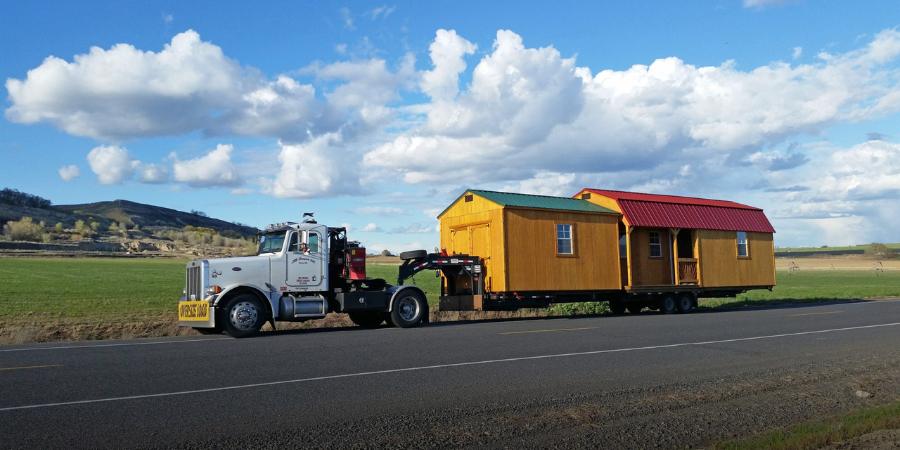
Mark the proposed location, property lines, easements, overhead wires, gates and the route from the road. Check drainage and how the shed will sit on the prepared site. A pre-built shed must be delivered into position; an attractive building is of little use if it cannot pass through the access route.
Ask the seller what base and site preparation the selected model needs, who is responsible for that work, and how level the finished area must be. Photograph the proposed route and measure its narrowest opening, including height beneath tree branches or wires. If a truck cannot reach the location, discuss the delivery plan before committing to a size or design.
Permit rules depend on the municipality, building size, use and location. A building on skids is not automatically exempt. Review our Alberta county shed permit guide, Calgary shed guide, Edmonton shed guide or Red Deer shed guide, then confirm the rule for your address with the local authority. Include planned electrical, plumbing or heat in that conversation.
Compare the total project, not just the shed price
Ask what is included with the building, delivery and setup. Budget for site preparation, any permit or trade work, and the interior features you truly need. A smaller model with the right door and layout can be better value than a larger shed that wastes floor space.
Compare quotes using the same checklist: footprint, door size, floor, roof and siding, interior options, delivery distance, setup requirements and warranty. Ask when payment is due and who handles any delivery access problem. That makes two different models easier to compare and helps avoid surprises after ordering.
A short checklist before you choose
- List the items and activities the shed must accommodate now and in the next few years.
- Measure the largest item, door clearance, usable interior space and proposed site.
- Confirm the route for delivery and the ground preparation required.
- Check permit, setback and service requirements with the local authority.
- Compare complete quotes, then choose the layout and features that solve your actual needs.
Bring us a few details—your intended use, largest item, rough footprint, delivery location and desired features. We can help narrow the custom shed options and discuss a building that works for your site.

